

RECENT SEARCHES
Recently Viewed
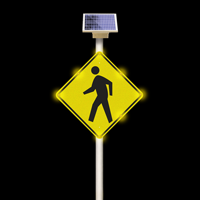
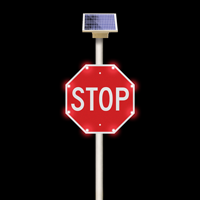
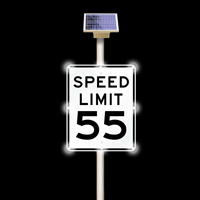
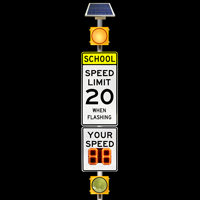
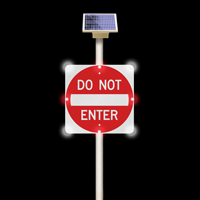
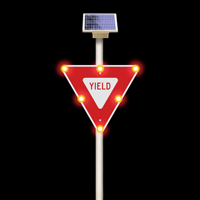
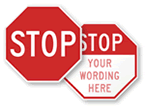
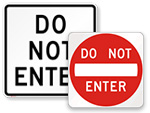
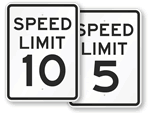
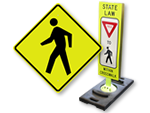
We stock solar LED kits for the six sign messages that carry the most safety weight: stop, yield, do not enter, speed limit, pedestrian crossing, and school speed limit. The school kit adds dual beacons and a radar speed display that shows a driver their actual speed. Sizes run from 24 by 24 inches up to 48 by 48 inches depending on the message, and every kit is MUTCD compliant. For any sign message not offered as an LED kit, see the standard reflective versions on our MUTCD-compliant signs page, or call for a quote on a beacon kit paired to a custom face.
Yes, our solar LED traffic signs are MUTCD compliant, and flashing beacons are covered by Chapter 4L of the MUTCD, currently the 11th edition, published in December 2023 and effective January 2024. The rules that matter on install: the sign face still has to meet the MUTCD standard for shape, color, legend, and retroreflectivity, and the LEDs supplement that face rather than replace it. Beacons must not obscure any part of the legend. Rectangular rapid flashing beacons, added to the MUTCD in the 11th edition, are a specific device with tighter rules. An RRFB may only supplement a pedestrian (W11-2), school (S1-1), or trail (W11-15) crossing warning sign carrying a downward diagonal arrow plaque at a marked crosswalk, and it must be installed on both sides of the roadway. Public roads follow the MUTCD, and your state DOT or local agency has final say on placement, so confirm the application with them before you install at a public intersection.
Solar powered traffic signs run all night, every night, because the system is sized for a full dusk-to-dawn cycle plus reserve. LEDs draw very little current, so the overnight load is small next to the battery capacity, and professional systems are built with several days of autonomy, commonly three to seven days, so the sign keeps flashing through a stretch of overcast days with no sun at all. The controller extends that further. Run a sign in scheduled mode so it only flashes during school arrival and dismissal, or during peak hours, and the same battery covers a much longer stretch of bad weather than a sign flashing around the clock.
Yes, solar LED signs work in cold, low-sun climates, and cold weather is not the problem people expect. LEDs run more efficiently at low temperatures, and lithium iron phosphate (LiFePO4) batteries hold their capacity in cold far better than sealed lead acid, which is why they are the preferred chemistry for northern installs. Short days are the real constraint. A northern winter delivers roughly three to four peak sun hours against six to eight in summer, and a panel set at a shallow summer angle can lose 30 to 40 percent of its winter output because the sun sits low. For cold-climate sites, we recommend three things: pick a mounting spot with unobstructed southern exposure and no tree or building shadow at midday, tilt the panel steeply so it faces the low winter sun and sheds snow instead of collecting it, and brush the panel clear after heavy snow. Where the site is deeply shaded or in a far northern latitude, size up the panel and battery rather than accepting marginal charging.
Solar signs cost more up front per unit but much less to install and run. The installation gap is where the money actually is. A hardwired sign needs a licensed electrician, a trench or conduit from the nearest service point, permits, pavement or landscape restoration, and a metered connection that bills monthly. A solar sign needs a post, a concrete footing, and a couple of hours. This difference grows with distance. The further your location is from electrical service, the more solar wins. At rural intersections, trailheads, or far ends of parking lots, there is often no realistic grid option. After installation, a solar sign has no power bill. Running costs are periodic cleaning and one battery replacement every several years.
Solar powered signs need about twice-yearly maintenance, mostly cleaning the panel. Dust, pollen, road salt, and bird droppings on the glass reduce charging, so wash the panel with water and a soft cloth each spring and fall, and after heavy snow in winter. At the same visit, check that the panel is aimed correctly and no branch has grown into its sun path. Confirm the LEDs fire through a full flash cycle. Check the battery box seal, wiring gland, and post fasteners for corrosion or loosening. Wipe the sign face and any beacon lens so the reflective sheeting performs at night. Log the battery installation date, as it is the only part with a scheduled end of life.
The battery is the only wear part in a solar sign and is replaced on a cycle of years rather than months. Battery life depends on chemistry and how deeply it is drained each night. A generously sized system kept at a shallow daily depth of discharge lasts far longer than one run near empty every night. Lithium iron phosphate is rated for thousands of charge cycles and holds up in heat and cold. Sealed lead acid costs less but wears out sooner, especially in cold climates. Signs the battery is failing include dimming or stopping before dawn or not lasting through two overcast days. Replacement is a field job: open the battery enclosure, disconnect and swap the pack for the same chemistry and capacity, and recycle the old one. Call our team for the correct replacement pack for your kit.
Yes. We can pair beacon kits with custom sign faces, so you can put your own message, speed, facility name, or bilingual legend behind the same solar hardware. Start from our custom traffic signs for the face, and call the team to spec the beacon, panel, and controller for your site and flash schedule. Tell us the location, the hours you want the sign active, and how much shade it gets, since those three answers determine the panel and battery size. Call (888) 343-3771, Monday through Friday, 8:00am to 7:00pm EST, or email customerservice@smartsign.com for a quote.
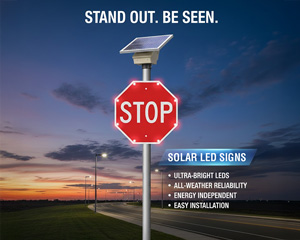
We build MUTCD-compliant solar-powered LED traffic signs. Each is a complete off-grid kit: a reflective aluminum sign face, a perimeter of high-intensity LEDs or a pair of flashing beacons, a solar panel, a sealed battery, and a smart controller. All components are on one post with no trenching or electrical service needed. Ensure continuous safety and compliance with LED flashing beacons that operate 24/7 and provide a moving light source where a static sign might be missed.
Call our sales team at (800) 952-1457 and get your quote in minutes!
Mon - Fri 8:00am to 7:00pm EST